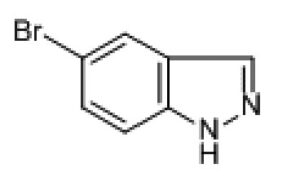
5-Bromoindazole (CAS 53857-57-1) is an important heterocyclic compound widely used in chemical and pharmaceutical research. As a derivative of indazole, it contains a bromine atom attached to the fifth position of the indazole ring structure, making it a valuable intermediate in the synthesis of complex organic molecules. Scientists and researchers often utilize 5-Bromoindazole for developing pharmaceutical compounds, agrochemicals, and other advanced chemical materials.
Due to its unique chemical structure and reactivity, 5-Bromoindazole has gained increasing attention in medicinal chemistry and drug discovery. This compound plays a critical role in the development of biologically active molecules and serves as a building block for many innovative research projects. In this article, we will explore the chemical properties, synthesis methods, applications, and safety considerations of 5-Bromoindazole.
Before exploring its applications and synthesis, it is important to understand the basic chemical characteristics of 5-Bromoindazole.
Chemical Name: 5-Bromoindazole
CAS Number: 53857-57-1
Molecular Formula: C7H5BrN2
Molecular Weight: 197.03 g/mol
Chemical Class: Heterocyclic aromatic compound
Structure: Indazole ring substituted with a bromine atom at the 5th position.
Indazole derivatives are well-known for their biological activities and chemical versatility. The presence of the bromine substituent in 5-Bromoindazole enhances its reactivity, making it useful in various coupling reactions and synthetic transformations.
5-Bromoindazole belongs to the indazole family, which consists of a fused benzene and pyrazole ring system. This bicyclic structure provides excellent stability and allows the compound to participate in multiple chemical reactions.
Key structural features include:
A fused heterocyclic aromatic ring system
Two nitrogen atoms within the pyrazole ring
A bromine atom attached at the fifth position
Strong aromatic stability
The bromine substituent plays an important role in facilitating substitution reactions and cross-coupling reactions such as Suzuki, Heck, and Buchwald–Hartwig reactions.
Because of these properties, 5-Bromoindazole is widely used as a synthetic intermediate in pharmaceutical chemistry.
Understanding the physical and chemical properties of 5-Bromoindazole helps researchers determine how the compound behaves in laboratory conditions.
Appearance: Typically a white to off-white crystalline powder
Molecular Weight: 197.03 g/mol
Melting Point: Generally reported within a moderate temperature range depending on purity
Solubility: Soluble in organic solvents such as DMSO, methanol, and dimethylformamide
Aromatic heterocyclic compound
Reactive bromine substituent
Suitable for cross-coupling reactions
Stable under standard laboratory conditions
These characteristics make 5-Bromoindazole highly useful for synthetic organic chemistry.
Several synthetic approaches can be used to prepare 5-Bromoindazole. The choice of method depends on the available starting materials and the desired purity level.
One of the most common methods involves selective bromination of indazole or substituted indazole compounds. In this process, brominating agents introduce a bromine atom at the desired position on the aromatic ring.
Typical reagents used include:
N-bromosuccinimide (NBS)
Molecular bromine
Other brominating reagents
Careful control of reaction conditions ensures that bromination occurs specifically at the 5-position.
Another approach involves constructing the indazole ring through cyclization reactions using brominated precursors. These reactions often involve:
Hydrazine derivatives
Aromatic aldehydes or ketones
Brominated aromatic intermediates
This method allows chemists to build the indazole ring while simultaneously introducing the bromine atom.
Modern synthetic chemistry often uses transition-metal catalysis to produce substituted indazoles. Catalysts such as palladium are frequently used to enable highly selective reactions.
Advantages of this method include:
High reaction efficiency
Improved selectivity
Better scalability for industrial production
5-Bromoindazole has a wide range of applications in chemical and pharmaceutical research. Its versatility makes it a valuable compound in several scientific fields.
Indazole derivatives are commonly studied for their potential biological activities. 5-Bromoindazole serves as a key intermediate in the synthesis of compounds that may exhibit:
Anti-inflammatory properties
Anticancer activity
Antimicrobial effects
Enzyme inhibition
Many drug discovery programs rely on indazole-based structures because they interact effectively with biological targets.
In medicinal chemistry, 5-Bromoindazole acts as a building block for designing new therapeutic molecules. The bromine atom allows researchers to perform cross-coupling reactions that attach various functional groups to the indazole core.
This flexibility enables scientists to design molecules with improved pharmacological properties.
Organic chemists frequently use 5-Bromoindazole as an intermediate in complex chemical synthesis. It can participate in several types of reactions, including:
Suzuki coupling reactions
Heck reactions
Buchwald–Hartwig amination
Nucleophilic substitution reactions
These reactions allow researchers to create more complex molecular structures for further study.
Some heterocyclic compounds are used in the development of agrochemicals such as pesticides and herbicides. 5-Bromoindazole may serve as a structural component in the design of such molecules.
Research in this area focuses on improving agricultural productivity while minimizing environmental impact.
Universities and research institutions often study indazole derivatives to better understand their chemical behavior and biological potential. 5-Bromoindazole is frequently used in:
Synthetic methodology research
Structure–activity relationship studies
Chemical biology investigations
Researchers prefer 5-Bromoindazole for several reasons:
Versatile Reactivity
The bromine substituent enables numerous chemical transformations.
Stable Structure
The aromatic indazole ring provides structural stability.
Compatibility with Modern Reactions
The compound works well in advanced catalytic reactions widely used in pharmaceutical research.
High Research Value
It serves as an essential intermediate for developing complex chemical compounds.
Like many chemical compounds used in research laboratories, 5-Bromoindazole must be handled carefully.
Recommended safety precautions include:
Use of protective gloves and lab coats
Working in well-ventilated laboratory environments
Avoiding inhalation or direct skin contact
Proper storage in tightly sealed containers
Researchers should always consult the material safety data sheet (MSDS) before handling the compound.
To maintain its chemical stability, 5-Bromoindazole should be stored under controlled conditions.
Recommended storage conditions include:
Cool and dry environment
Protection from moisture
Storage away from strong oxidizing agents
Sealed containers to prevent contamination
Proper storage ensures the compound maintains its purity and effectiveness for research purposes.
The importance of heterocyclic compounds in pharmaceutical science continues to grow. As a result, 5-Bromoindazole is expected to remain an important research chemical in the coming years.
Future research may focus on:
Development of new indazole-based drugs
Advanced catalytic synthesis techniques
Discovery of new biological activities
Applications in material science and biotechnology
As scientific research progresses, compounds like 5-Bromoindazole will continue to play a crucial role in chemical innovation.
5-Bromoindazole (CAS 53857-57-1) is a valuable heterocyclic compound widely used in chemical and pharmaceutical research. Its unique indazole structure and reactive bromine substituent make it a versatile intermediate in organic synthesis and medicinal chemistry.
From drug discovery and agrochemical development to academic research and synthetic chemistry, 5-Bromoindazole serves as an essential building block for creating innovative chemical compounds. With ongoing research in heterocyclic chemistry and pharmaceutical science, this compound will likely continue to contribute significantly to scientific advancements.