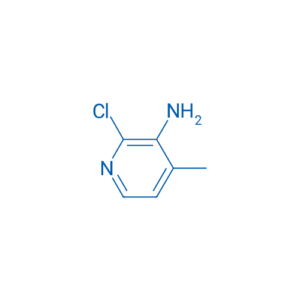
CAS Number: 133627-45-9
Chemical Name: 2-Chloro-4-methylpyridin-3-amine
IUPAC Name: 2-Chloro-4-methylpyridin-3-amine
Synonyms:
2-Chloro-3-amino-4-methylpyridine;
3-Amino-2-chloro-4-methylpyridine;
4-Methyl-2-chloropyridin-3-amine
Molecular Formula: C₆H₇ClN₂
Molecular Weight: ~142.59 g/mol
Appearance: Off-white to light yellow crystalline powder
Physical State: Solid
Melting Point: Typically reported in the range of 95–105 °C (may vary depending on purity)
Boiling Point: Not typically reported; may decompose at elevated temperatures
Solubility:
Soluble in common organic solvents such as methanol, ethanol, dichloromethane, and acetonitrile; limited solubility in water
Stability:
Stable under recommended storage conditions; may be sensitive to strong oxidizing agents and prolonged exposure to moisture
Functional Groups:
Aromatic pyridine ring
Amino group (–NH₂)
Chloro substituent (–Cl)
Methyl group (–CH₃)
Chemical Class:
Substituted aminopyridine / Heterocyclic aromatic amine
SMILES (representative):
CC1=NC(Cl)=C(N)C=C1
InChI Key (representative):
(Varies by database; available from chemical registries)
133627-45-9 is commonly used as an intermediate in the synthesis of pharmaceutical compounds, particularly in the development of:
Heterocyclic drug candidates
Agrochemical active ingredients
Biologically active small molecules
The aminopyridine core structure is frequently found in medicinal chemistry scaffolds.
Used as a building block for:
Crop protection agents
Specialty intermediates
Functionalized pyridine derivatives
The presence of both amino and chloro substituents allows for further substitution and cross-coupling reactions (e.g., nucleophilic substitution, Suzuki coupling, etc.).
Commonly employed in:
Academic research laboratories
Medicinal chemistry programs
Process development and route optimization
Structure–activity relationship (SAR) studies
Its multifunctional pyridine framework makes it highly adaptable in multi-step synthetic pathways.
GHS Classification (typical for substituted aminopyridines):
Harmful if swallowed
Causes skin and eye irritation
May cause respiratory irritation
Common Hazard Statements:
H302: Harmful if swallowed
H315: Causes skin irritation
H319: Causes serious eye irritation
H335: May cause respiratory irritation
Precautionary Statements:
P261: Avoid breathing dust
P280: Wear protective gloves and eye protection
P305 + P351 + P338: IF IN EYES, rinse cautiously with water and remove contact lenses
P301 + P312: IF SWALLOWED, call a doctor if you feel unwell
Handle in a well-ventilated area using appropriate personal protective equipment (PPE).
Typical Purity: 97–99% (Research and Industrial Grade)
Storage Conditions:
Store in a tightly sealed container
Keep in a cool, dry, and well-ventilated area
Protect from moisture and direct sunlight
Keep away from strong oxidizing agents
Commercial Use:
Available from specialty chemical suppliers for research and industrial organic synthesis applications.
Not intended for direct pharmaceutical, food, or diagnostic use without appropriate regulatory compliance.
133627-45-9 (2-Chloro-4-methylpyridin-3-amine) is a versatile substituted aminopyridine widely used as a key intermediate in pharmaceutical, agrochemical, and fine chemical synthesis. Its reactive amino and chloro functionalities make it particularly valuable for further derivatization and advanced heterocyclic compound development.
As a trusted manufacturer and supplier in Hyderabad, SriniChem provides high-quality 133627-45-9 (2-Chloro-4-methylpyridin-3-amine) produced under strict quality control standards. Our product, with CAS No: 133627-45-9, is suitable for both research and industrial use. Choose SriniChem for reliable supply, technical expertise, and customer-focused service. Contact SriniChem today for 2-Chloro-4-methylpyridin-3-amine.