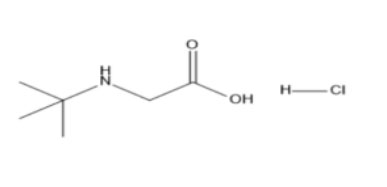
In pharmaceutical and fine chemical research, amino acid derivatives play a vital role as intermediates and functional building blocks. One such important compound is 6939-23-7 (2-(tert-Butylamino)acetic Acid Hydrochloride). Known for its stability and versatility, this compound is widely used in medicinal chemistry and specialty chemical synthesis. This article explores its properties, applications, and overall chemical importance.
CAS Number: 6939-23-7
Chemical Name: 2-(tert-Butylamino)acetic Acid Hydrochloride
Molecular Formula: C₆H₁₄ClNO₂
Compound Type: Amino acid derivative (hydrochloride salt)
The compound consists of an amino-functionalized acetic acid with a tert-butyl substituent, present as a hydrochloride salt. This form enhances solubility and stability, making it suitable for laboratory and industrial use.
Appearance: White to off-white crystalline powder
Solubility: Highly soluble in water and polar solvents
Stability: Stable under normal storage conditions
pH Behavior: Acidic due to hydrochloride salt formation
These properties make 6939-23-7 easy to handle and reliable for controlled chemical reactions.
2-(tert-Butylamino)acetic acid hydrochloride is commonly used as an intermediate in drug synthesis, especially in compounds involving amino acid frameworks. It supports the development of APIs and biologically active molecules.
The compound is valuable in structure–activity relationship (SAR) studies, helping researchers modify molecular structures to improve drug efficacy and safety.
Due to its functional amino and carboxylic acid groups, it is used in the synthesis of custom organic molecules, peptides, and advanced chemical derivatives.
Research institutions utilize this compound for experimental synthesis, method development, and chemical innovation projects.
The importance of 6939-23-7 (2-(tert-Butylamino)acetic Acid Hydrochloride) lies in its functional versatility. The tert-butylamino group introduces steric control, while the acetic acid backbone allows easy integration into complex molecules. These features make it essential for:
Drug discovery and formulation
Advanced organic synthesis
Chemical process optimization
Development of nitrogen-containing compounds
Its hydrochloride form ensures consistency and improved handling across applications.
Use appropriate personal protective equipment (PPE)
Avoid direct contact with skin and eyes
Store in a cool, dry, and well-ventilated area
Always consult the Safety Data Sheet (SDS) before use
Following standard laboratory safety practices ensures safe and effective usage.
6939-23-7 (2-(tert-Butylamino)acetic Acid Hydrochloride) is a valuable compound in modern chemistry, particularly in pharmaceutical and fine chemical industries. Its stable properties, broad applicability, and chemical flexibility make it an essential intermediate for research and industrial synthesis. As demand for advanced chemical solutions grows, this compound continues to play a key role in innovation and development.