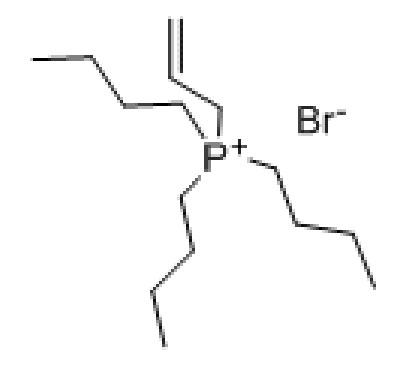
In advanced organic chemistry, the choice of reagent can determine the success of a reaction. One compound that continues to stand out for its efficiency and utility is Allyltributylphosphonium Bromide (CAS No. 55894-18-3). Known for its high reactivity in carbon–carbon bond formation, this phosphonium salt is valuable in research labs, chemical synthesis, and pharmaceutical development.
This blog explores its properties, uses, benefits, and safety guidelines to help researchers understand why this compound is widely preferred.
Allyltributylphosphonium Bromide is a quaternary phosphonium salt formed from the reaction of tributylphosphine and allyl bromide. The compound is widely used in organic chemistry due to its role in the Wittig reaction, enabling the transformation of carbonyl compounds into alkenes.
Its structure provides enhanced solubility and handling convenience, making it an attractive choice for synthetic chemists.
Parameter |
Details |
|---|---|
Chemical Name |
Allyltributylphosphonium Bromide |
CAS Number |
55894-18-3 |
Molecular Formula |
C₁₅H₃₄PBr |
Molecular Weight |
323.297 |
Appearance |
White to pale-yellow crystalline solid |
Solubility |
Soluble in organic solvents (e.g., methanol, ethanol, acetonitrile) |
Effective Wittig Reagent – Ideal for converting aldehydes and ketones into alkenes with high selectivity.
Stable Under Normal Lab Conditions – Can be stored safely when kept dry and sealed.
Excellent Purity Options – Usually available at 98%–99% purity levels.
Enhanced Solubility – Tributyl groups improve solubility in organic solvents, aiding reaction performance.
Its primary use is in Wittig olefination, allowing chemists to form alkenes with excellent control over stereochemistry.
The allyl group makes it a useful building block for creating various allyl derivatives, which are widely used in organic synthesis and medicinal chemistry.
Pharmaceutical R&D often requires reliable reagents for making complex molecular frameworks. This compound provides consistent results and high yields.
Researchers exploring new polymers and catalytic systems use phosphonium salts like Allyltributylphosphonium Bromide as functional intermediates.
To ensure safety and long-term stability:
Store in a sealed container in a cool, dry place.
Keep away from moisture and strong oxidizing agents.
Wear gloves, eye protection, and a lab coat during handling.
Use within a fume hood or well-ventilated workspace.
High Reliability – Consistent reaction performance.
Versatile Applications – Suitable for both small-scale synthesis and industrial research.
Cost-Effective – Readily available and economical for routine lab use.
Good Reactivity Profile – Provides clean transformations with fewer by-products.
55894-18-3 (Allyltributylphosphonium Bromide) is an essential reagent in modern organic chemistry, especially for carbon–carbon bond formation reactions. Its stability, efficiency, and broad applicability make it a trusted compound in academic laboratories, pharmaceutical research, and synthetic material development.