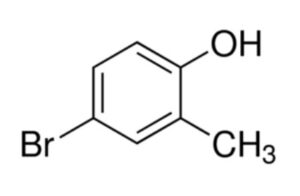
4-Bromo-2-methylphenol is a specialized aromatic compound widely used in chemical research, pharmaceutical synthesis, and industrial applications. Identified by the CAS number 2362-12-1, this compound possesses distinct physical and chemical properties that make it valuable in various scientific disciplines.
IUPAC Name: 4-bromo-2-methylphenol
Molecular Formula: C7H7BrO
Molecular Weight: 187.04 g/mol
CAS Number: 2362-12-1
Structure: The molecule consists of a phenol ring with a bromine atom at the para (4-) position and a methyl group at the ortho (2-) position.
This substitution pattern significantly affects the molecule’s reactivity and polarity, making it a versatile building block in organic synthesis.
Property |
Value |
|---|---|
Appearance |
White to off-white powder |
Melting Point |
~66–69°C |
Boiling Point |
Decomposes before boiling |
Solubility |
Slightly soluble in water, soluble in organic solvents |
Stability |
Stable under normal conditions |
4-Bromo-2-methylphenol is frequently used as an intermediate in the synthesis of bioactive compounds, particularly where halogenated aromatic rings are needed for activity or selectivity.
It serves as a precursor in the development of certain herbicides or fungicides, where brominated phenolic structures are favored for their stability and effectiveness.
Due to the presence of both an electron-donating (–OH, –CH₃) and an electron-withdrawing (–Br) group, the compound is reactive in electrophilic aromatic substitution, cross-coupling reactions (e.g., Suzuki, Heck), and other modification techniques.
As with all halogenated phenols, care must be taken during handling:
Use personal protective equipment (PPE)
Avoid inhalation and skin contact
Store in a cool, dry, and well-ventilated place away from oxidizing agents
Refer to the compound’s Material Safety Data Sheet (MSDS) for complete safety information.
4-Bromo-2-methylphenol (CAS: 2362-12-1) is a useful synthetic intermediate with broad applications in pharmaceutical, chemical, and industrial research. Understanding its properties and handling requirements is essential for anyone involved in organic synthesis or chemical development.
Whether you’re a researcher in medicinal chemistry or a formulator in industrial R&D, this compound offers a valuable addition to your chemical toolkit.